Stop-motion Animation is my favourite medium and art form. For my final year at NIDA, I decided to embark on a research project about Costume Fabrication in Stop Motion - one that requires intensive research, iterations and a presentation. This research project was to be a marriage between my two degrees: Animation and Costume. I wanted to dive into the world of fabricating miniature costumes as well as understanding the armature and rigging of costumes.
So, I created a characters in a fictitious circus known as the Milkyway Menagerie.
Come meet Enid Roach and LeRoy the Mongrel
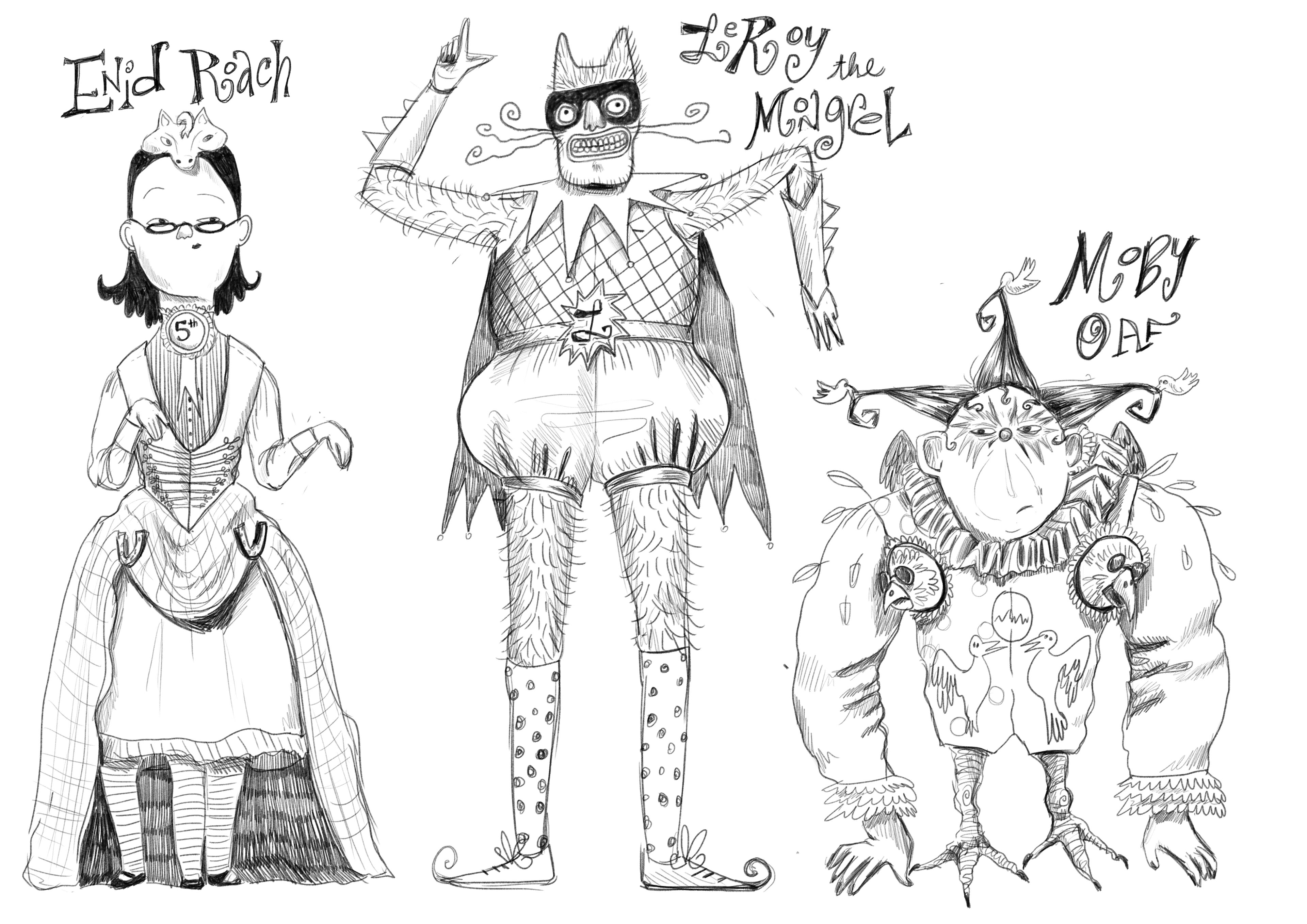
Original sketch for characters. Moby Oaf was not completed
My Process Video (12mins)
Process video of the makings of fabrication process.
As I began my research, I discovered that academic texts focusing primarily in costume fabrication in stop-motion animation were little to none. I found videos on YouTube such as Laika Studios Archive series and Rebecca Black-Glickos channel. I was also inspired by Eadweard Mulbrigdes Animal Locomotion series and the movement and drape of garments in each frame work. I found that articles and blog posts centred around the building of the armature puppets and not the costume of the character. Using the principles of animation, I theorised that the costume in stop motion animation applied to half . This includes squash and stretch, arcs, follow through, appeal, secondary action and exaggeration. The most important research was immersing myself in stop-motion films.
I re-watched the Laika Studios filmography, Tim Burtons infamous stop-motion films, Adam Elliot, Wes Anderson films, Aardman Animation, MacKinnon and Saunders, Czech animation masters like Jirí Trnka and Jirí Brdeck, Jan Svankmajer’s and Yuri Norstein and independent artist/studios such as Allison Schnulznik, AraCourt, Phil Tippett and Andrea Love and many many more.
My interest for side show performers and costumes has been a passion since childhood. I find these themes and visuals scattered in my artwork throughout the years. I knew I wanted to make peculiar characters in rich costumes. After researching the history of the circus, I had to discover how fabrication techniques, construction methods and materials in stop-motion animation costume influence their design, movement, durability and visual impact.
My question was:
How do differing fabrication methods affect the design and functionality of a Stop-motion animation costume?
I had over a month and a half and a small budget to answer this.
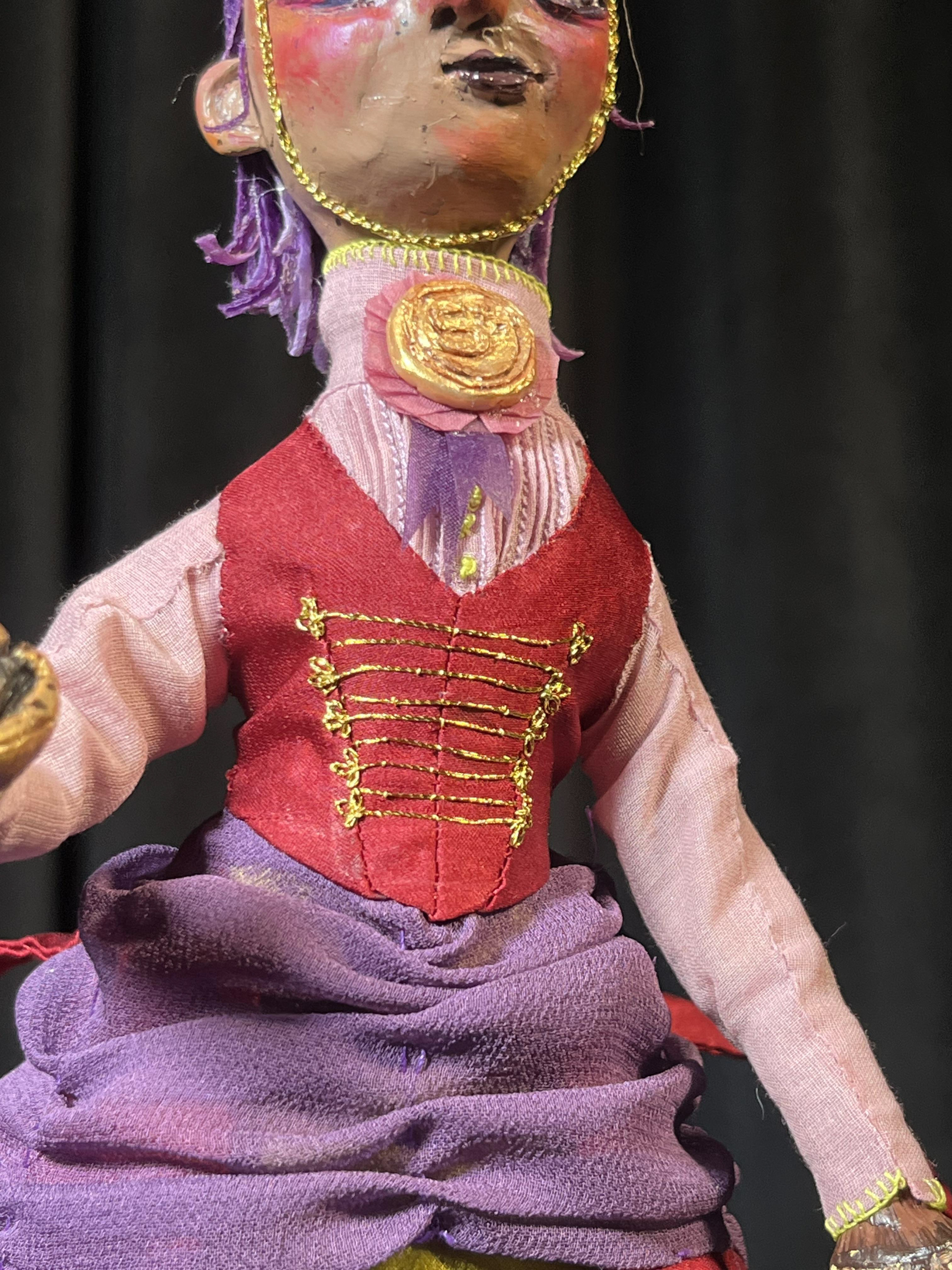
Enid Roach
Enid Roach is an equestrian enthusiast. She dreams of performing as a horse for the circus. Quite and timid, her most prized possession is her 5th place award broach she won for competing as a horse.
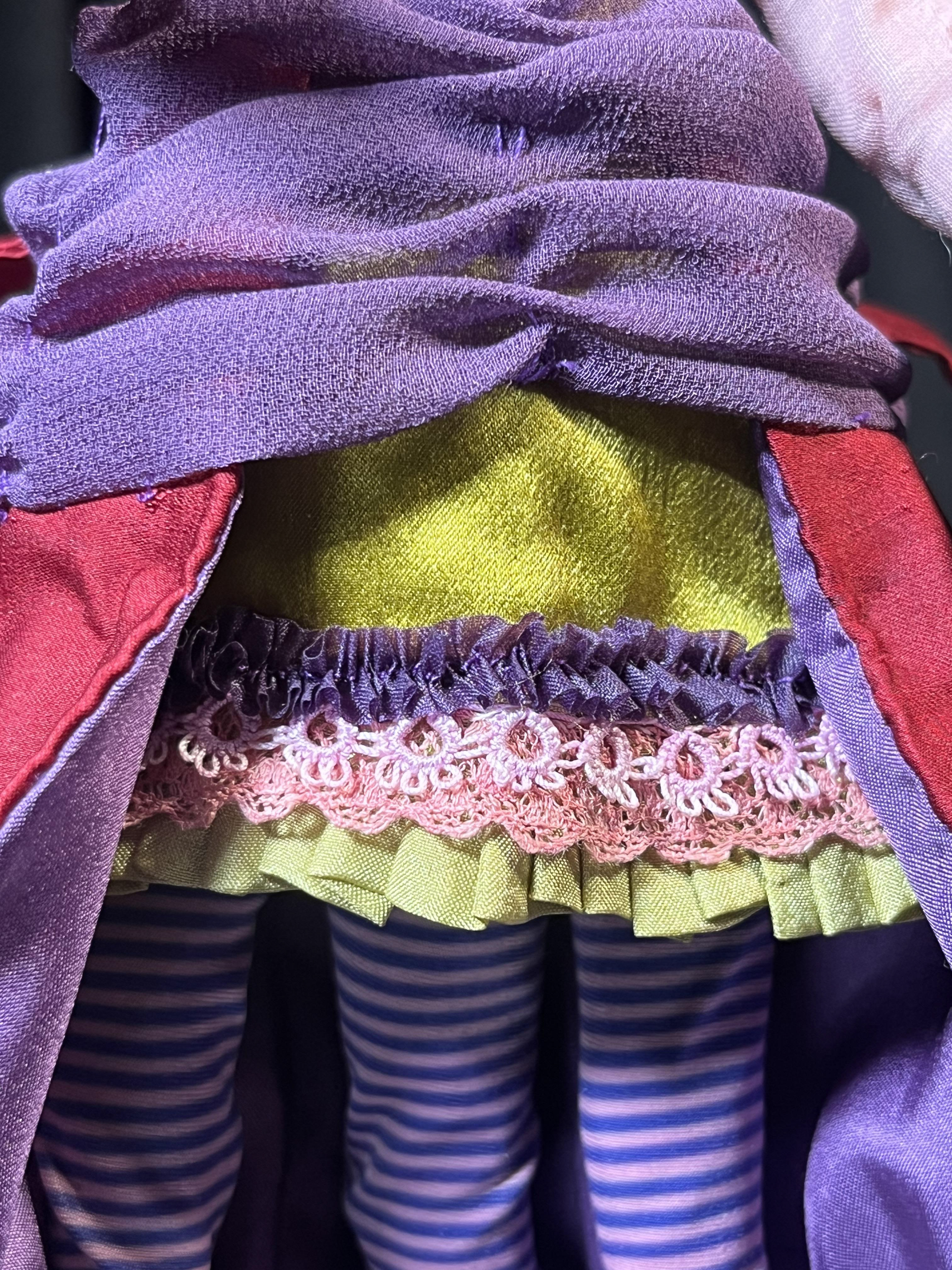
Her design was inspired by 1880s bustle silhouettes and circus performance military costumes. She is approximately 20cm (not including her felted horse head piece).
I began making a basic body armature using wire and foam clay and making a mesh body suit to anchor the fabric to. The characters body was not intended to move however the costume was.
A video of understanding the shape of a bustle skirt for Enid Roach
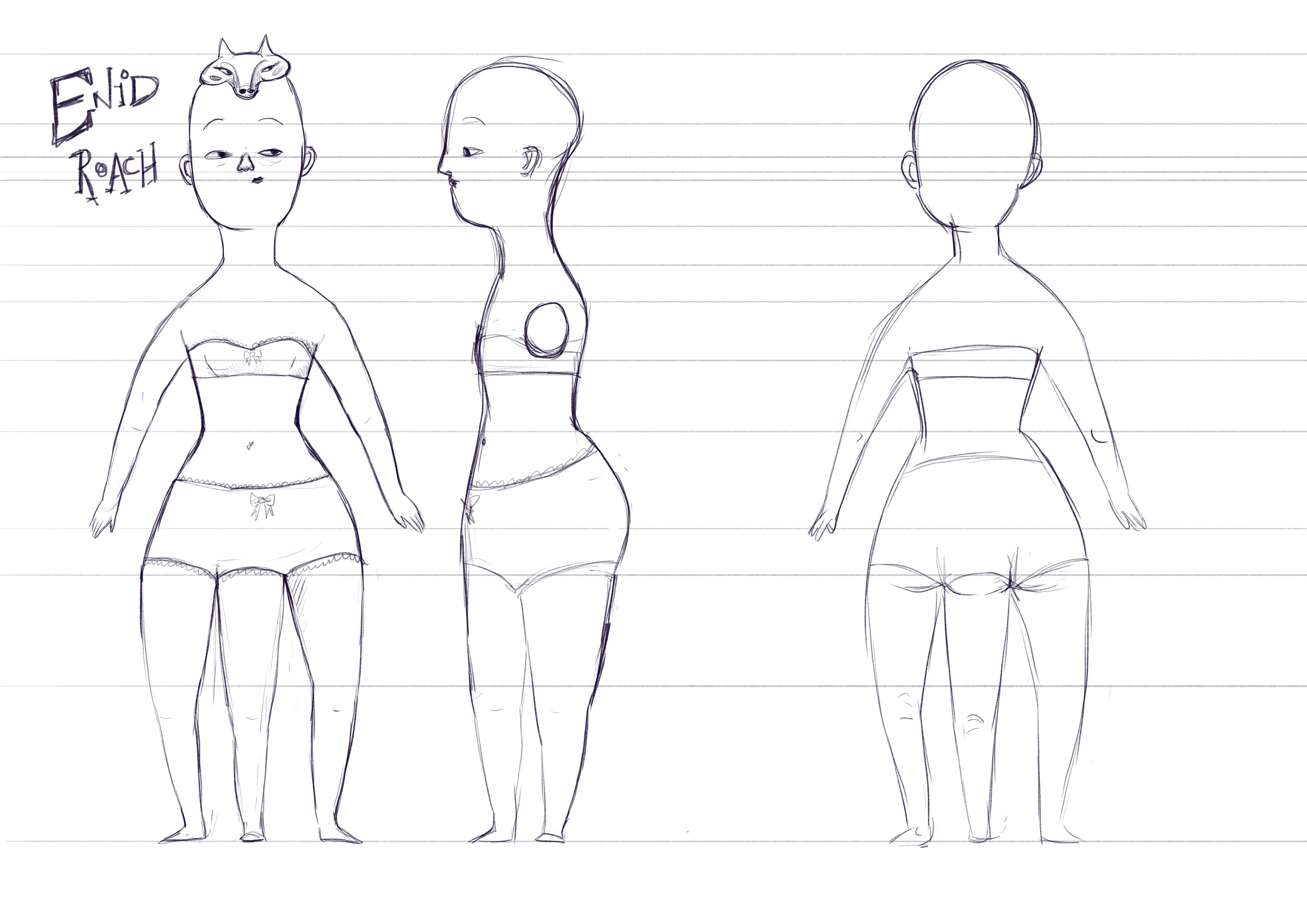
Enid Roach turn around no costume
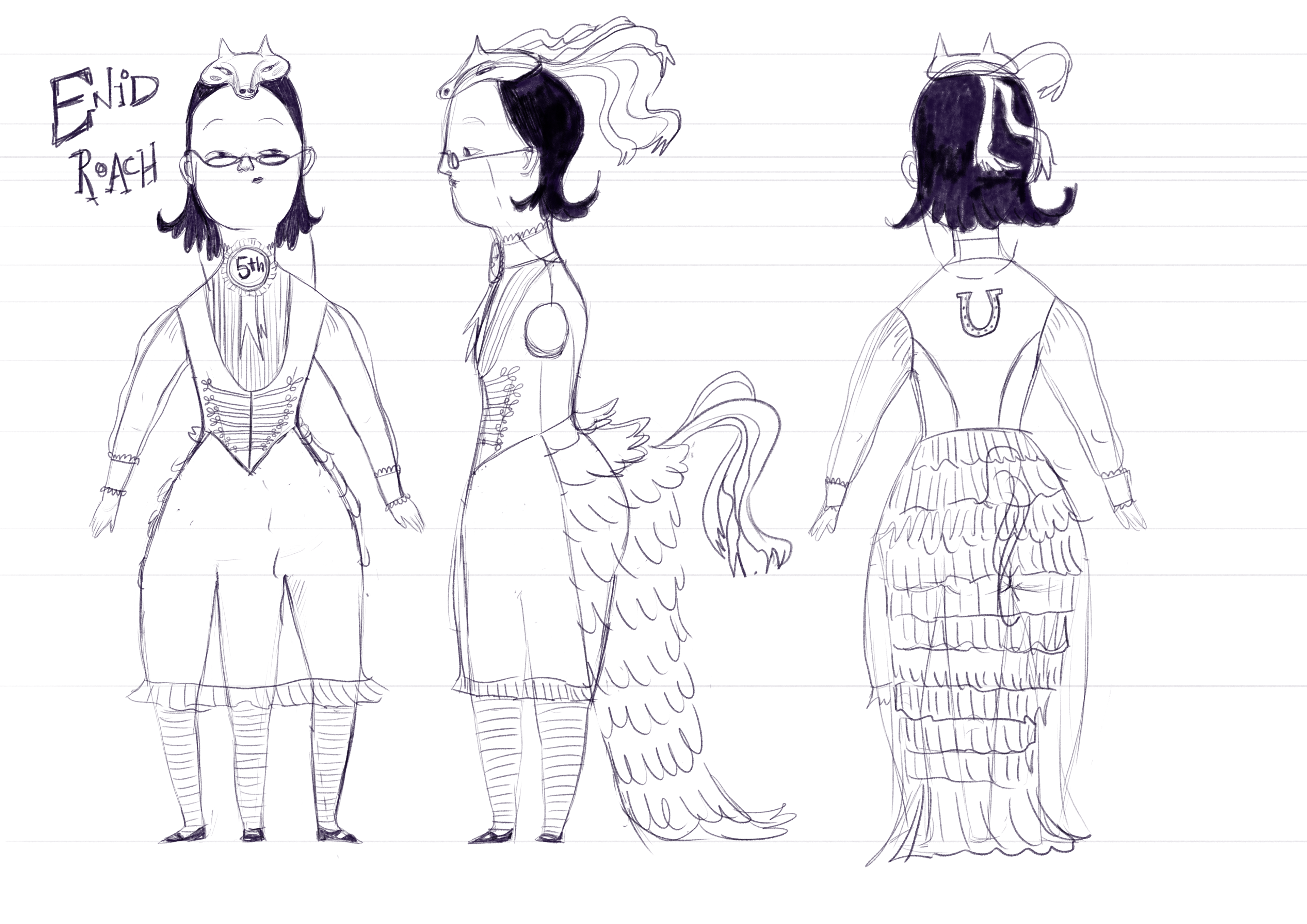
Enid Roach turn around with costumes
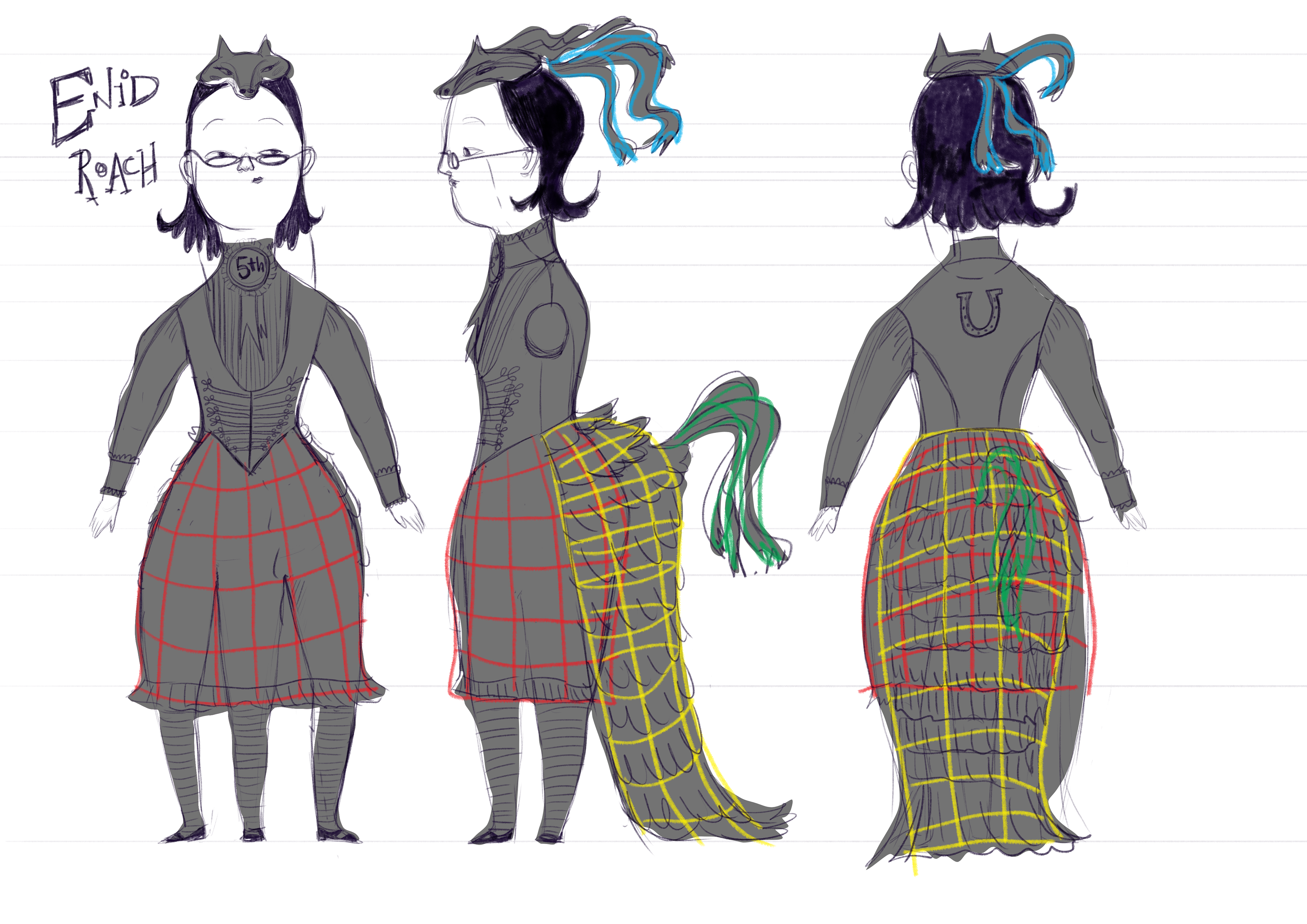
Enid Roach with armature rig for costume
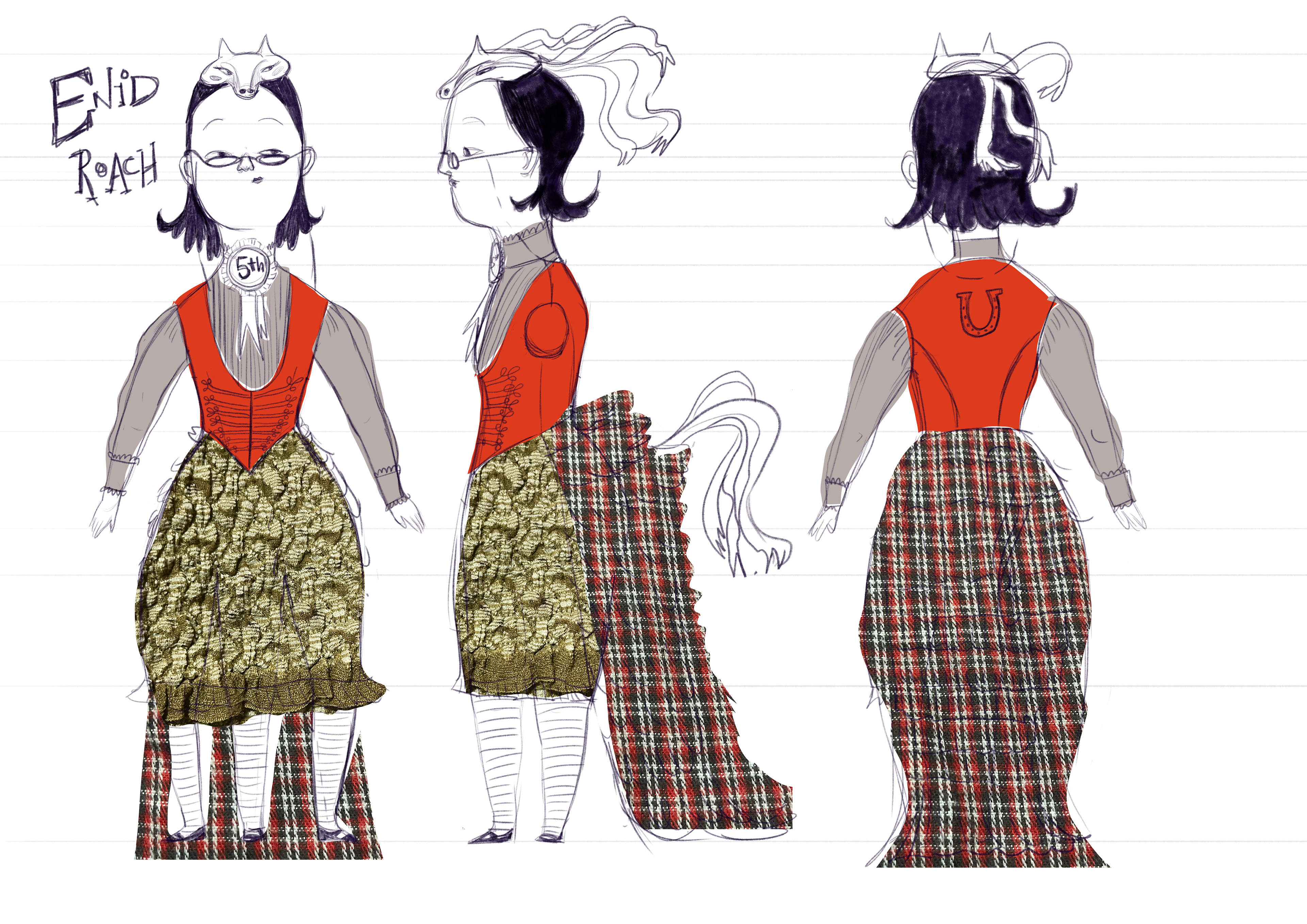
Enid roach collage of fabrics and texture
I created character turn around sheets to help with the dimensions and rotation of the characters. In the third turn around these were the elements I wanted to be animatable such as the bustle skirt and tail. I found that costume design did impact the ability of movement of the characters. Whilst having Enids legs exposed it meant that the bustle skirt was and attached on to the waist that limited movement. and it also exposed the inside of the skirt which meant that it had to also be lined which added additional bulk.
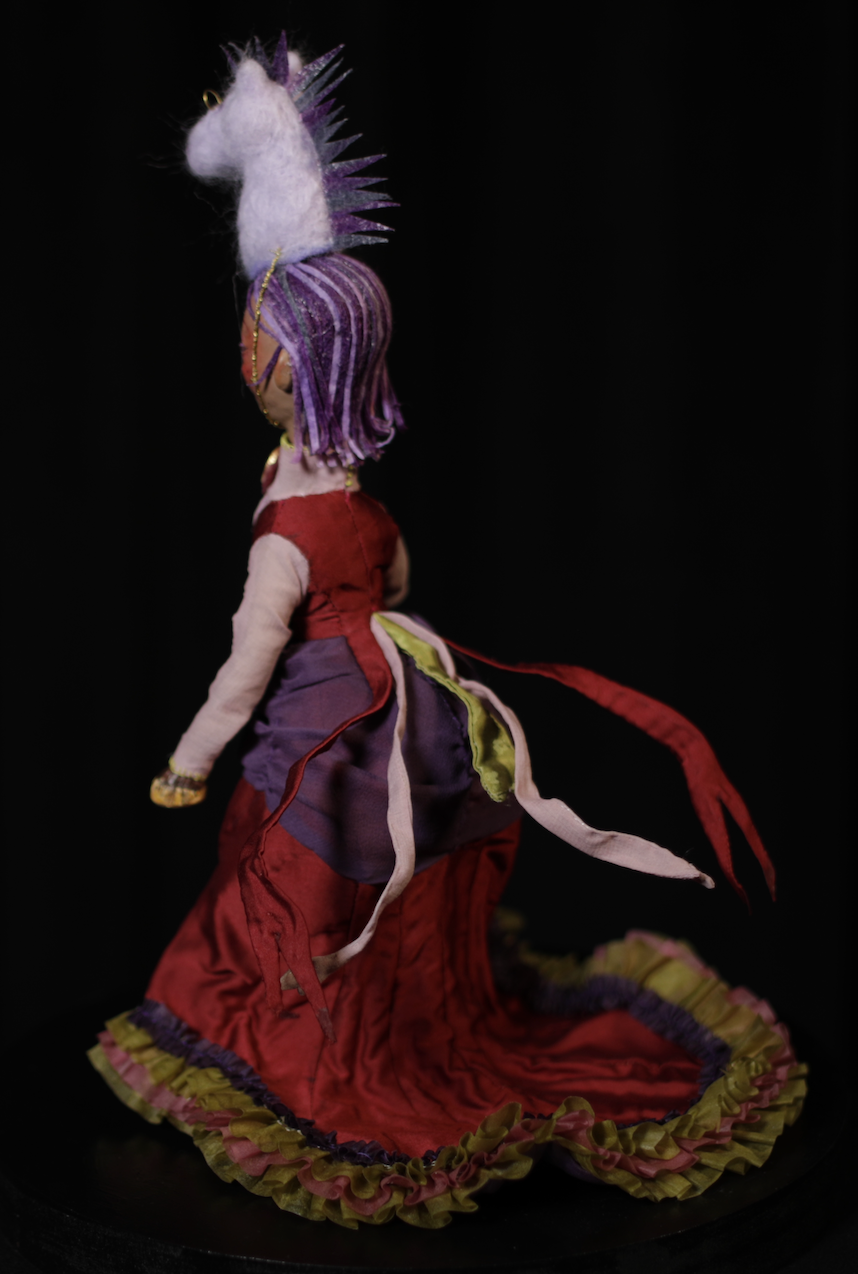
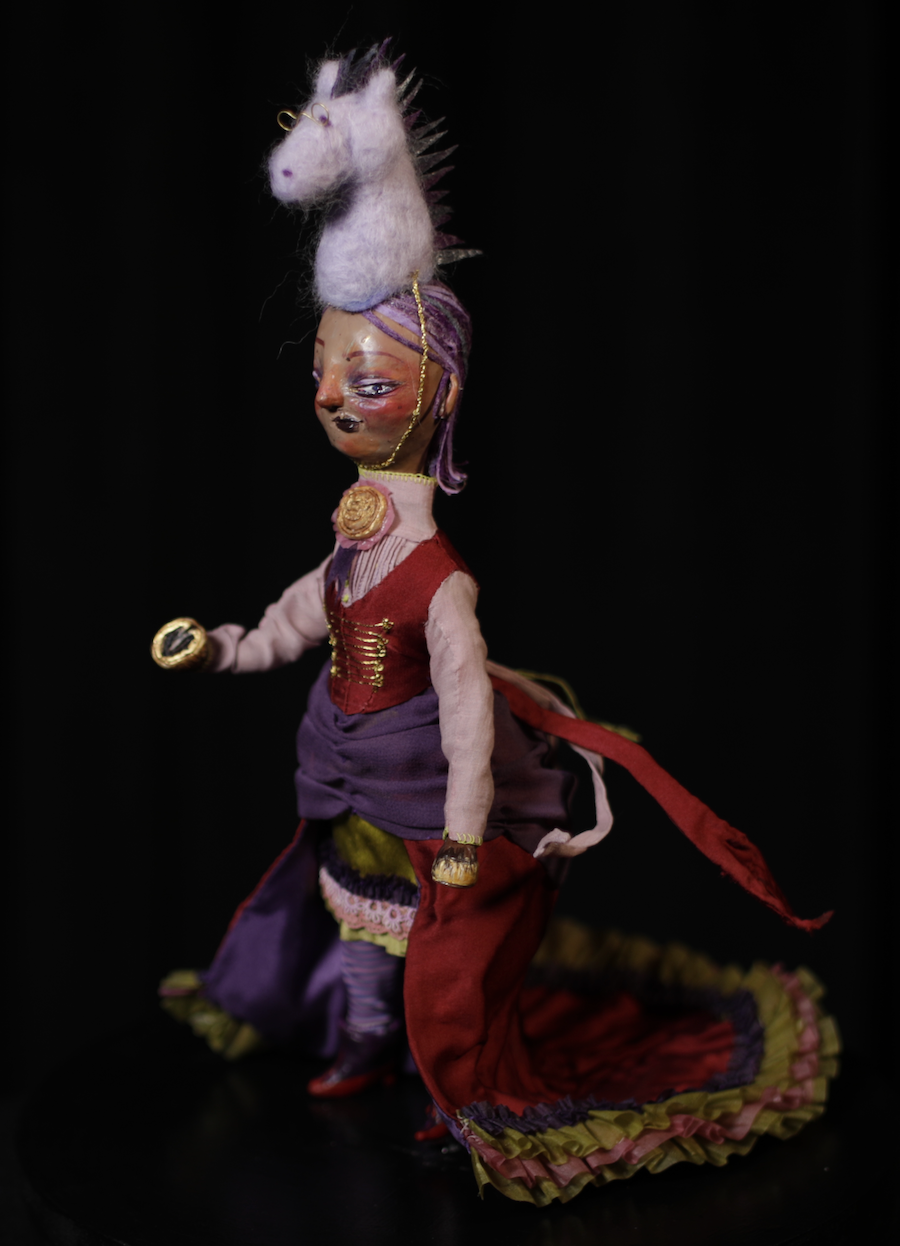
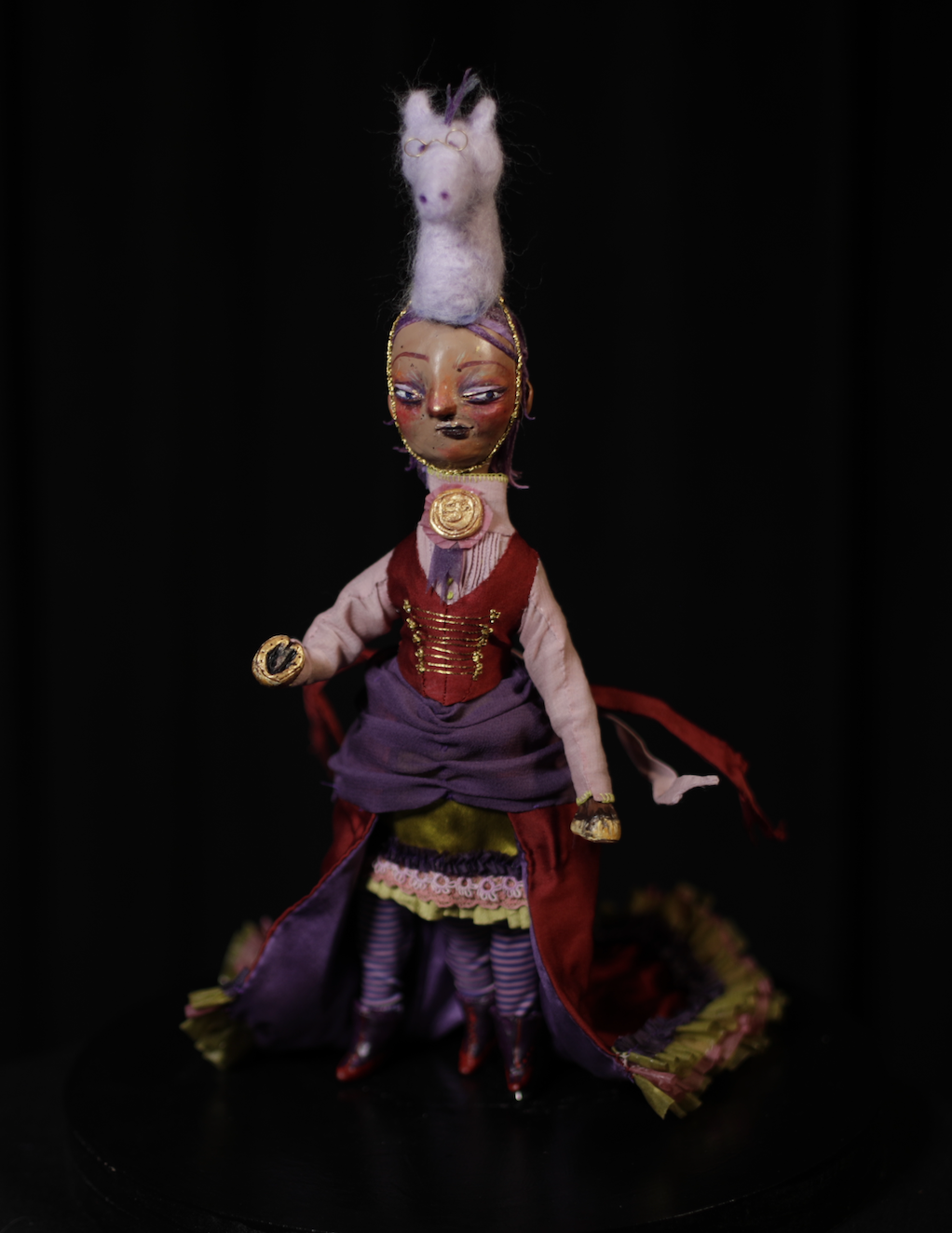
What did I discover?
There are so many factors that has to be taken in to consideration when making a costumes such as the expectations and limitations of movement, the weight of movement you want the fabric to convey, how to hide wire armatures in to fabrics.
I learnt that adding wi
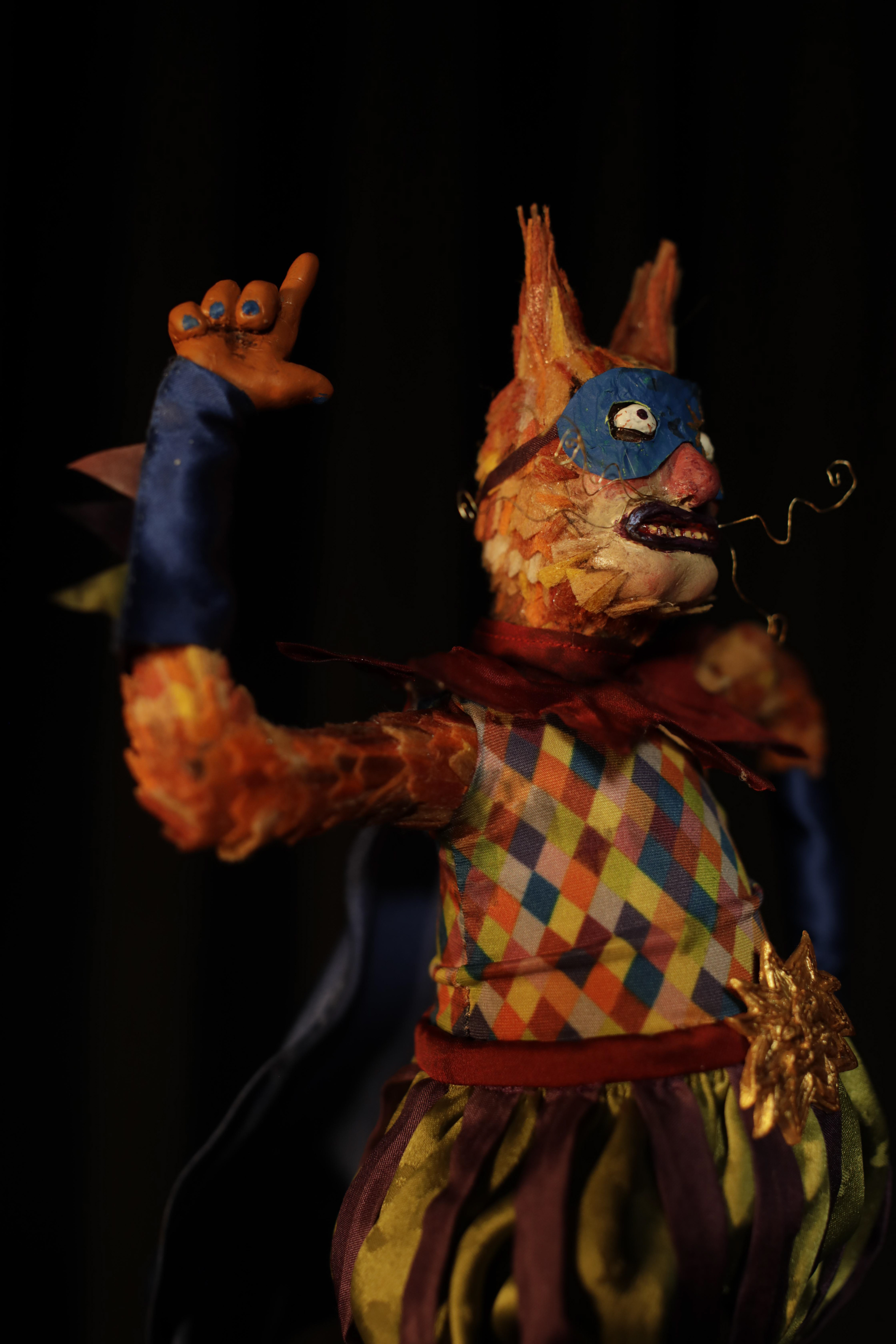
LeRoy the Mongrel
is the self proclaimed maestro of the Milkyway Menagerie.